How to Enable Telnet in Windows 10

Teletype Network, more commonly known as Telnet, is a network protocol that predates the currently used Transmission Control Protocols (TCP) and Internet Protocols (IP). Developed as early as 1969, Telnet uses a simple command-line interface which is predominantly, used to establish a remote connection between two different systems and communicate between them. So, how to enable Telnet on Windows Server 2019 or 2016? The Telnet network protocol consists of two different services: Telnet Client & Telnet Server. Users seeking to control a remote system or server should be running the Telnet client while the other system runs a Telnet server. We bring to you a perfect guide that will help learn how to enable Telnet in Windows 7/10.

How to Enable Telnet in Windows 7 or 10

Since Telnet network protocols were developed in the formative years of the internet, it lacks any form of encryption, and commands between a telnet server and client are exchanged in plain text. In the 1990s, when the internet and computers were becoming available to a much larger audience, concerns over communication security started growing. These concerns saw Telnet being replaced by the Secure Shell Protocols (SSH) which encrypted data before transmitting and authenticated connections by the means of certificates. However, Telnet protocols are not at all, dead and buried yet, they are still being used to:

  • send commands & remotely manage the server to run a program, access files & delete data.
  • manage & configure new network devices such as routers & switches.
  • test TCP connectivity.
  • check port status.
  • connect RF Terminals, Barcode scanners and similar data collection devices.

Data transfer in simple text format by Telnet implies faster speed and easy setup process.

All Windows versions have the Telnet Client pre-installed; although, in Windows 10, the client is disabled by default and requires manual enabling. There are only two ways on how to enable Telnet Windows Server 2019/2016 or Windows 7/10.

Method 1: Using Control Panel

The first method of enabling it is by using the settings interface of Control Panel. Here’s how to enable Telnet in Windows 7 or 10:

1. Press Windows key and type Control Panel. Click on Open to launch it.

2. Set View by > Small icons and click on Programs and Features, as depicted below.

3. Click Turn Windows features on or off option from the left pane.

4. Scroll down the list and check the box marked Telnet Client, as highlighted below.

5. Click on OK to save the changes. 

Also Read: Show Control Panel in WinX Menu in Windows 10

Method 2: Using Command Prompt

Telnet can also be enabled by running a single command line in either Command Prompt or Windows Powershell.

Note: Both, Command Prompt & Windows Powershell should be launched with administrative privileges to enable Telnet.

Here’s how to enable Telnet in Windows 7 or 10 using DISM command:

1. In the Search bar located on the taskbar, type cmd.

2. Click Run as administrator option to launch Command Prompt.

3. Type the given command and press Enter key:

dism /online /Enable-Feature /FeatureName:TelnetClient

This is how to enable Telnet in Windows 7/10. You can now start using the Telnet feature and connect to a remote Telnet Server.

Also Read: Delete a Folder or File using Command Prompt (CMD)

Casual Uses of Telnet

While Telnet protocols may be considered archaic by many, enthusiasts have still kept it alive in various forms.

Option 1: Watch Star Wars

In the 21st century, a famous and casual case of Telnet is to watch an ASCII version of Star Wars in Command Prompt window, as follows:

1. Launch Command Prompt as administrator as instructed in Method 2.

2. Type Telnet Towel.blinkenlights.nl and press Enter to execute.

3. Now, sit back and enjoy George Lucas, Star Wars : A New Hope (Episode IV) in a way you never knew existed.

Option 2: Play Chess

Follow the steps listed below to play chess in Command Prompt with the help of Telnet:

1. Launch Command Prompt as administrator as earlier

2. Type Telnet and hit Enter to activate it.

3. Next, type o freechess.org 5000 and press Enter key.

4. Wait for Free Internet Chess Server to be set up. Enter a new username and start playing.

If you too, know any such cool tricks with the Telnet client, share the same with us and fellow readers in the comment section below.

Frequently Asked Questions (FAQs)

Q1. Is Telnet available in Windows 10?

Ans. The Telnet feature is available on Windows 7, 8 & 10. By default, Telnet is disabled on Windows 10.

Q2. How do I set up Telnet in Windows 10?

Ans. You can set up Telnet in Windows 10 from Control Panel or Command Prompt. Follow the methods explained in our guide to do the same.

Q3. How do I enable telnet from Command Prompt in Windows 10?

Ans. Simply, execute the given command in Command Prompt window running with administrative privileges:

dism /online /Enable-Feature /FeatureName:TelnetClient

Recommended:

We hope that this guide was helpful and you were able to learn how to enable Telnet in Windows 7/10. If you have any queries or, suggestions, then feel free to drop them in the comments section.


Leave a Comment

Side Hustles That Actually Pay in 2026: 7 Realistic Options and the Tradeoffs to Know

Side Hustles That Actually Pay in 2026: 7 Realistic Options and the Tradeoffs to Know

Compare realistic side hustles for 2026 by startup cost, fees, flexibility, and income control, with current tax and scam guidance from official sources.

Remote Work Ergonomics in 2026: Upgrade Your Home Office Without Overbuying

Remote Work Ergonomics in 2026: Upgrade Your Home Office Without Overbuying

Upgrade your home office ergonomics with current OSHA and NIOSH guidance on chair fit, monitor height, laptop setup, lighting, and movement.

Why Emotional Intelligence Matters in Leadership—and How to Build It

Why Emotional Intelligence Matters in Leadership—and How to Build It

Learn why emotional intelligence matters in leadership, where it helps most, how to strengthen it, and how to tell whether your approach is working.

How to Transition to a Tech Career Without a Degree: A Results-First Roadmap for 2026

How to Transition to a Tech Career Without a Degree: A Results-First Roadmap for 2026

A practical roadmap for moving into tech without a degree: choose an accessible role, build job-ready skills, prove them with projects, and use hiring feedback to improve.

Building a Personal Brand on LinkedIn in 2026: What Still Works, What Changed, and What to Ignore

Building a Personal Brand on LinkedIn in 2026: What Still Works, What Changed, and What to Ignore

Build a credible LinkedIn personal brand in 2026 with current profile, content, newsletter, analytics, verification, and visibility guidance from LinkedIn.

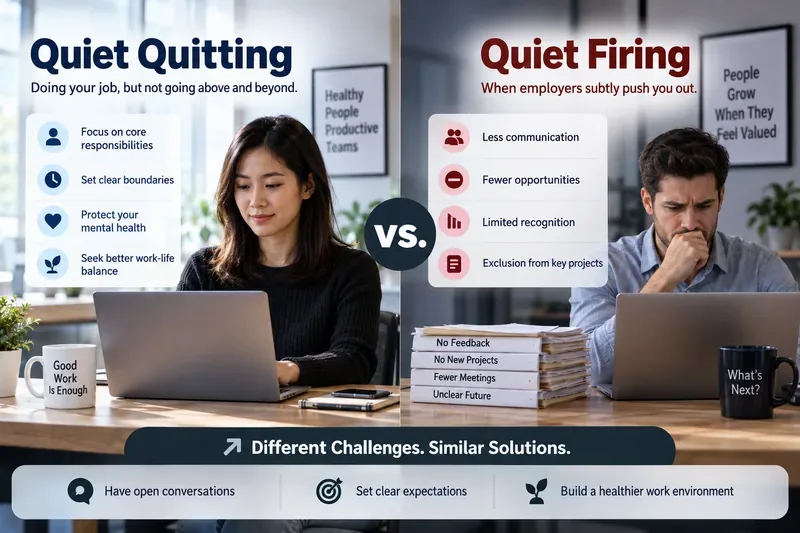
Quiet Quitting vs. Quiet Firing in 2026: What’s Really Changing at Work

Quiet Quitting vs. Quiet Firing in 2026: What’s Really Changing at Work

Quiet quitting and quiet firing are catchy labels, not diagnoses. Learn what is verified, what depends on context, and what employees and managers can do next.

The Rise of the Fractional Executive: When Part-Time C-Suite Leadership Makes Sense

The Rise of the Fractional Executive: When Part-Time C-Suite Leadership Makes Sense

Fractional executives offer senior leadership without a full-time hire. Learn when the model works, what to ask, and the risks to manage.

How to Negotiate a Raise During Q4 Performance Reviews: A Practical 2026 Decision Guide

How to Negotiate a Raise During Q4 Performance Reviews: A Practical 2026 Decision Guide

Prepare a stronger Q4 raise request with current wage data, timing options, compensation tradeoffs, and scripts for yes, partial, or no outcomes.

6 High-Income Skills You Can Start Learning Before 2026 Ends

6 High-Income Skills You Can Start Learning Before 2026 Ends

Choose a high-income skill you can realistically start before 2026 ends, with current pay data, learning priorities, and a practical self-check.

Mastering the Hybrid Work Schedule: A Practical Framework That Actually Holds Up

Mastering the Hybrid Work Schedule: A Practical Framework That Actually Holds Up

Build a hybrid work schedule around tasks, team overlap, and measurable outcomes. See sample patterns, warning signs, and when to adjust your plan.